Safety Basics at RedBlue
Welcome to the RedBlue Portal. This page covers the PPE basics our HVAC, Electrical, Plumbing, and Sheet Metal teams use across job sites on Vancouver Island and throughout BC.
PPE is the last line of defense. We still plan the work, control hazards, and use safe procedures first. When PPE is required, it must be selected properly, fit properly, and be maintained so it actually protects you. (worksafebc.com)
➜ Open The RedBlue Safety Files
Who Provides What
In BC, the regulation is very clear:
Worker generally provides
Clothing needed for protection against the natural elements
General purpose work gloves and appropriate footwear including safety footwear
Safety headgear (bclaws.gov.bc.ca)
RedBlue provides (when required for the task and hazard)
Video is for training support. Always follow WorkSafeBC requirements and stricter site rules.
All other PPE required by regulation, at no cost to the worker (bclaws.gov.bc.ca)
If you are unsure, ask your supervisor before starting the task.
RedBlue Standard PPE Basics
These are common baseline items for most sites.
Head protection
Wear safety headgear where overhead, falling-object, or similar hazards exist, and keep it on when required by the site and hazard assessment. (worksafebc.com)
Eye and face protection
Eye protection is required if eye hazards exist or are created by the work or conditions. (bclaws.gov.bc.ca)
Face protection covering eye protection is required if face hazards exist or are created. (worksafebc.com)
High visibility
If you work around moving vehicles or mobile equipment, high visibility apparel is required. WorkSafeBC ties the required class to speed:
30 km/h or less: Class 1, 2, or 3
Over 30 km/h: Class 2 or 3 (worksafebc.com)
Hearing protection
Workers in a posted noise hazard area must wear hearing protection, and employers must ensure it is worn effectively and meets applicable requirements. (worksafebc.com)
Video is for training support. Always follow WorkSafeBC requirements and stricter site rules.
Task Based PPE by Trade
Use this as the quick decision guide. If the hazard exists, PPE is not optional.
Electrical
Eye and face protection for cutting, drilling, grinding, and tasks where eye or face hazards exist. (bclaws.gov.bc.ca)
Upgrade hand and face protection based on the hazard assessment and the work being performed (especially around energized systems).
Clothing and PPE must not create avoidable hazards, and must be compatible with other PPE. (worksafebc.com)
HVAC and Refrigeration
Eye and face protection for brazing, cutting, drilling, and chemical exposure risks where hazards exist. (bclaws.gov.bc.ca)
Hearing protection when in posted noise hazard areas. (worksafebc.com)
Respiratory protection only when required by the hazard assessment and only within a proper respirator program. (worksafebc.com)
Plumbing
Eye and face protection for pressurized lines, cutting, drilling, and chemical hazards where hazards exist. (bclaws.gov.bc.ca)
Confined space work often requires additional controls and PPE. Follow RedBlue’s confined space procedure and site requirements.
Sheet Metal
Eye and face protection for cutting, grinding, drilling, and overhead work where hazards exist. (bclaws.gov.bc.ca)
Hearing protection when required by posted areas and exposure controls. (worksafebc.com)
Hand protection is task-specific due to sharp edges and pinch points. Choose gloves that protect while still allowing safe tool control.
Respirators and Fit Testing
If a respirator needs an effective seal to your face, it must not be issued unless a fit test demonstrates an effective seal. Fit tests must follow CSA procedures. (bclaws.gov.bc.ca)
Fit testing must be carried out:
Before initial use
At least once a year
Whenever there is a change in respirator facepiece (brand, model, or size) (bclaws.gov.bc.ca)
Before each use, workers must perform a positive or negative pressure user seal check in accordance with CSA requirements. (worksafebc.com)
Key reminders
No fit test, no tight-fitting respirator use. (bclaws.gov.bc.ca)
If the respirator model changes, you need a new fit test. (bclaws.gov.bc.ca)
Do a user seal check before each use. (worksafebc.com)
Fall Protection Basics
WorkSafeBC guidance summarizes the requirement clearly: fall protection systems are required when a worker could fall 3 m (10 ft) or more, or where a fall from a lesser height could result in serious injury. (worksafebc.com)
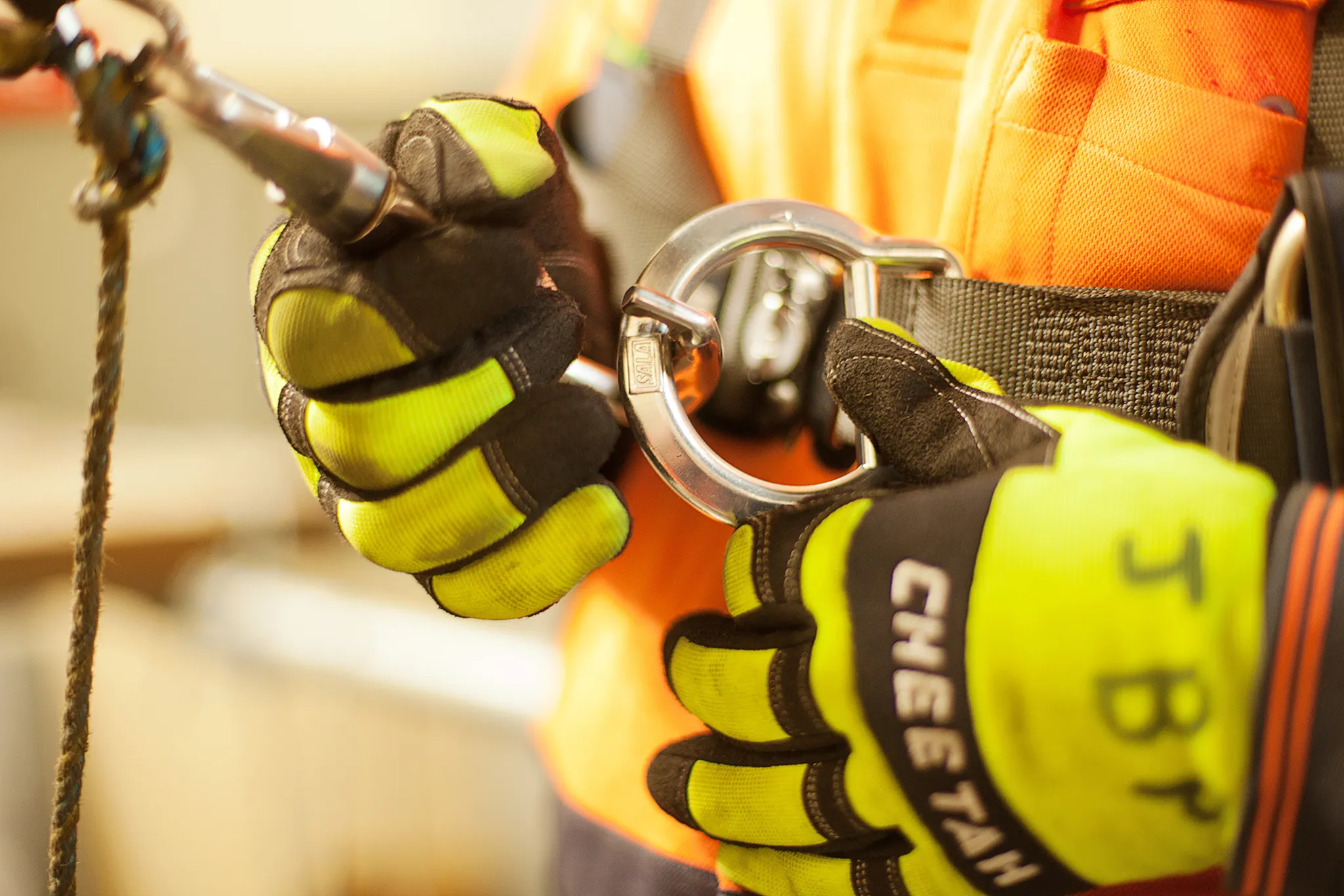
For fall arrest, a worker must wear a full body harness (or other harness acceptable to WorkSafeBC). (worksafebc.com)
Video is for training support. Always follow WorkSafeBC requirements and stricter site rules.
Inspection, Care, and Replacement
PPE must:
Provide effective protection
Not create a hazard on its own
Be compatible so one item does not make another ineffective
Be maintained in good working order and sanitary condition (worksafebc.com)
Before each shift
Check for damage, cracks, tears, missing parts
Replace damaged PPE immediately
Clean and store PPE properly so it stays protective (worksafebc.com)
Quick PPE Checklist
Before you start:
What hazards exist today on this site for this task?
Do I have the correct eye, face, hearing, and high visibility gear? (bclaws.gov.bc.ca)
Do I need a respirator, and do I have a current fit test and can I pass a seal check? (bclaws.gov.bc.ca)
Is there any fall risk, and is my harness system correct for the job? (worksafebc.com)
If anything is unclear, pause and ask.